Can fat people run?
Yes.
I could probably stop right there, but if you searched that question, I suspect you are not really asking whether it is physically possible for a fat person to put one foot in front of the other at a running pace. You may be asking something closer to: Is it safe? Will everyone stare at me? Will I hurt myself? Do I need to lose weight first? Am I kidding myself by wanting to call myself a runner?
I get it – I’ve been there.
I started at 262.2 pounds
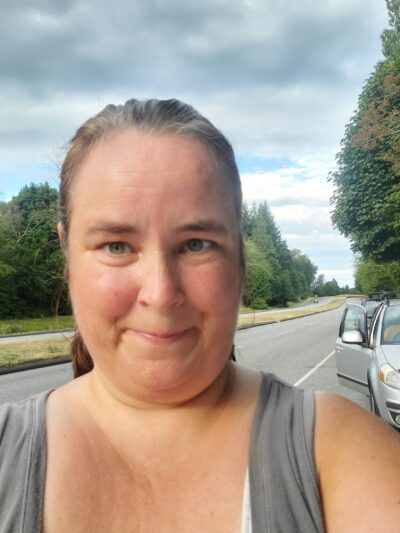
At one point I weighed 262.2 pounds. I was trying to lose weight, and exercise was part of that effort. Everyone told me that the fastest way to lose weight was to run, so I decided (against my better judgement) to give it a try. My first serious attempt at running was not a success story. I joined a running clinic, trained for Vancouver’s Sun Run, struggled in the slow group, walked during the race and finished feeling more discouraged than inspired.
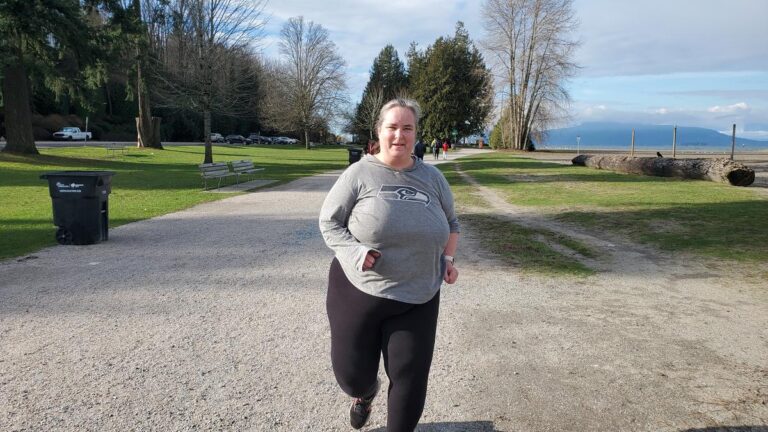
Years later, after building strength in the gym and working with my trainer Devin, I tried again. This time running became something different. I completed a 5K trail race in Whistler and crossed the finish line absolutely euphoric. I went on to run trail races, a half marathon, a marathon and eventually an 80-kilometre ultramarathon.
I tell you that not because I think you should run an ultra. Most people have absolutely no interest in doing that, and frankly there were points during mine when I questioned my own life choices.
I tell you because the body that once felt like proof that I did not belong in athletic spaces turned out to be capable of far more than I could ever imagine.
A larger body can change the experience
Saying fat people can run does not mean pretending body size never matters. It can.
You may need to think more carefully about support and chafing. Good shoes matter. A supportive sports bra can be the difference between enjoying a run and spending the next week trying not to let fabric touch raw skin (been there). Heat may feel different. Joints may need more gradual loading. Clothing sizes can be frustrating. And sometimes the emotional challenge of being visible in a larger body is harder than the running itself.
Those are practical considerations. They are not a verdict on whether you belong and do not need to be a barrier to starting.
If you have been inactive for a long time, have pain, significant health conditions, a history of injury or surgery, or simply are not sure what is appropriate for your body, this is where a qualified healthcare or fitness professional can be valuable. I have relied on trainers, physiotherapists, doctors and other professionals at different points in my own journey. Getting support and checking in with your doctor first is a sign that you are taking yourself and your body seriously.
You do not have to earn the right by losing weight first
Running and weight loss are tangled together culturally. I know they were tangled together for me. I originally exercised because I wanted to lose weight. But eventually the goal changed. I wanted to get stronger. I wanted to improve. I wanted to see what my body could do.
That shift mattered.
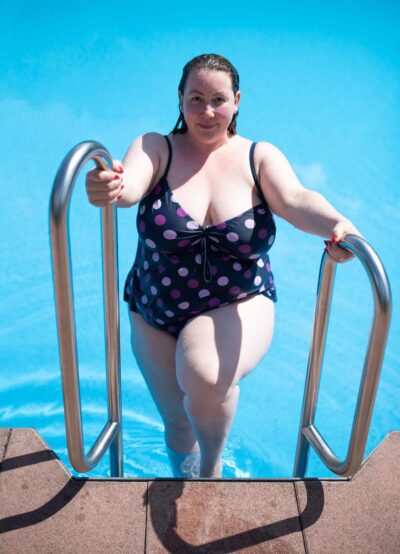
You may lose weight when you start running. You may not. Your weight may fluctuate. Mine certainly has. I lost more than 100 pounds, became a high-level recreational endurance athlete, was later injured in a serious accident, lost my athletic outlet, became depressed and gained the weight back.
Today I am fat again. That does not erase the athlete I was, and it does not disqualify the athlete I am trying to become again.
Start with the body that showed up today
One of the hardest things about beginning is wanting to start from a body you wish you had rather than the body that is actually standing there. Your current body is the only place you can begin.
That might mean walking more than running at first. It might mean very short intervals. It might mean strength work or pool running while you build capacity. It might mean a first goal that sounds tiny compared with somebody else’s.
Tiny is fine. Slow is fine. Walking is fine. Needing rest is fine.
The mistake is thinking none of it counts until you look like a runner.
What does a runner look like?
A runner looks like the person running.
I have been the fat woman at the back of a race. I have been the much smaller woman running a marathon. I have been the ultrarunner still moving after most of a day on the trail. I have been the injured former athlete who could barely do rehab exercises. And now I am a larger woman trying to rebuild again.
Every one of those versions of me belongs in the story.
So if you came here asking whether fat people can run, my answer is yes. But the more useful question may be: what would running look like for you?
Start there.